The Shrine Island · Chugoku
Miyajima for travel agents
Routing Miyajima in depth - tide-timed torii views, Daisho-in and Mount Misen, oyster and momiji food culture, and the ryokan overnight case.
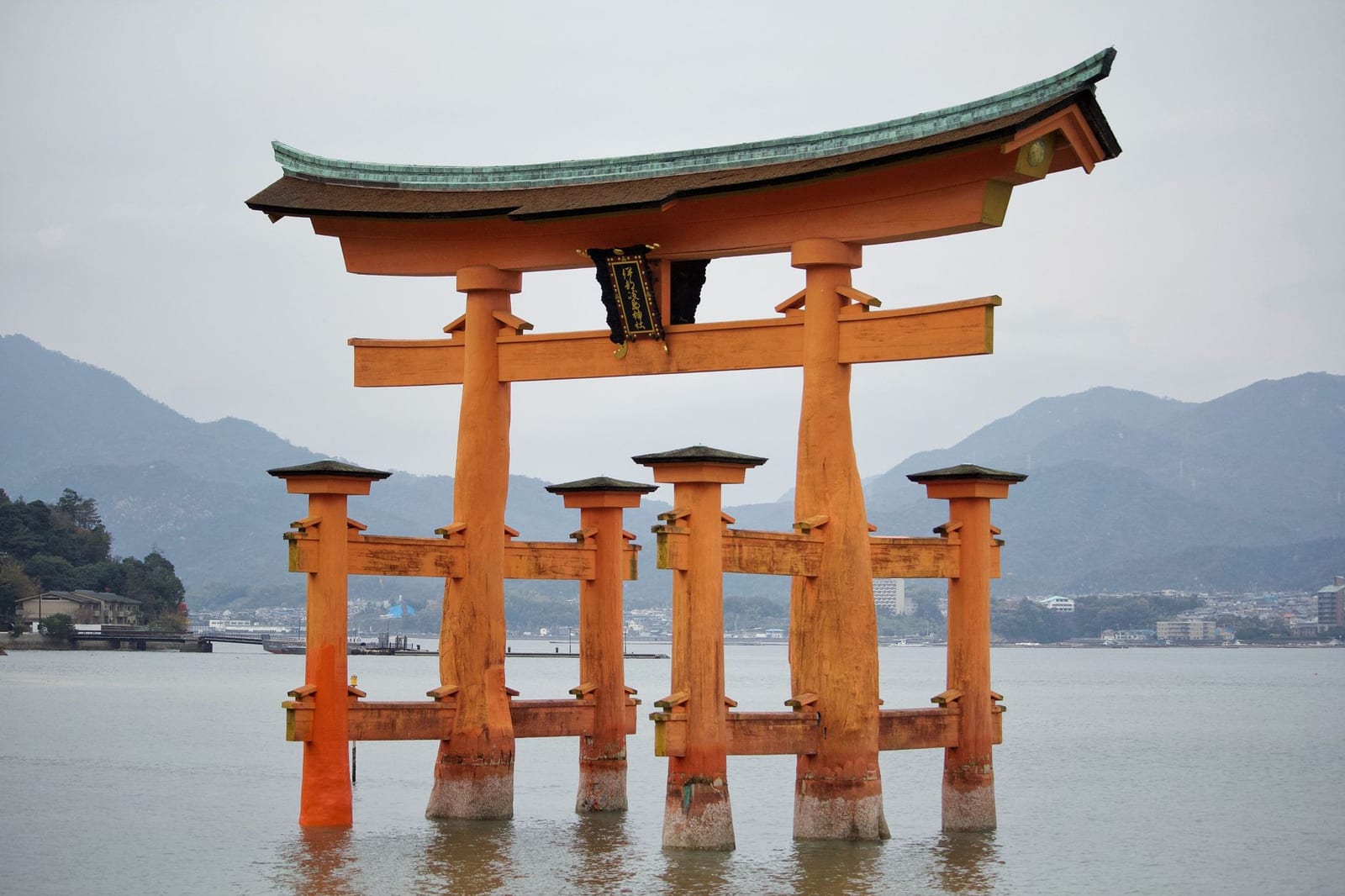
- The floating torii - Japan's most photographed shrine gate, tide permitting
- Mount Misen ropeway views over the Seto Inland Sea
- The overnight play: the island after the last ferry leaves
November's maple valley is the marquee; summer evenings bring lantern reflections and firework dates; oyster season (winter) feeds the food angle. Tides trump seasons - we plan the visit around the water, not the calendar.
Ferry coordination from Miyajimaguchi (10 minutes, with tram or private transfer from Hiroshima), tide-table planning at itinerary stage, island ryokan contracting for the overnight product, Mount Misen ropeway timing, Daisho-in guided visits, and oyster-and-anago dining bookings on Omotesando.
Miyajima is the island where Japan keeps its most famous view: a vermilion gate standing in the sea, a shrine on stilts behind it, and a sacred mountain rising wooded above. One of the country’s official three great views, it rewards being treated as more than Hiroshima’s afternoon.
Working the tides
The torii performs twice daily: afloat at high water, walkable at low. Everything else schedules around that rhythm - shrine corridors first or last, Misen’s ropeway in the middle window, oysters whenever. Itineraries built without the tide table gamble the photograph; ours are built from it.
The island after five
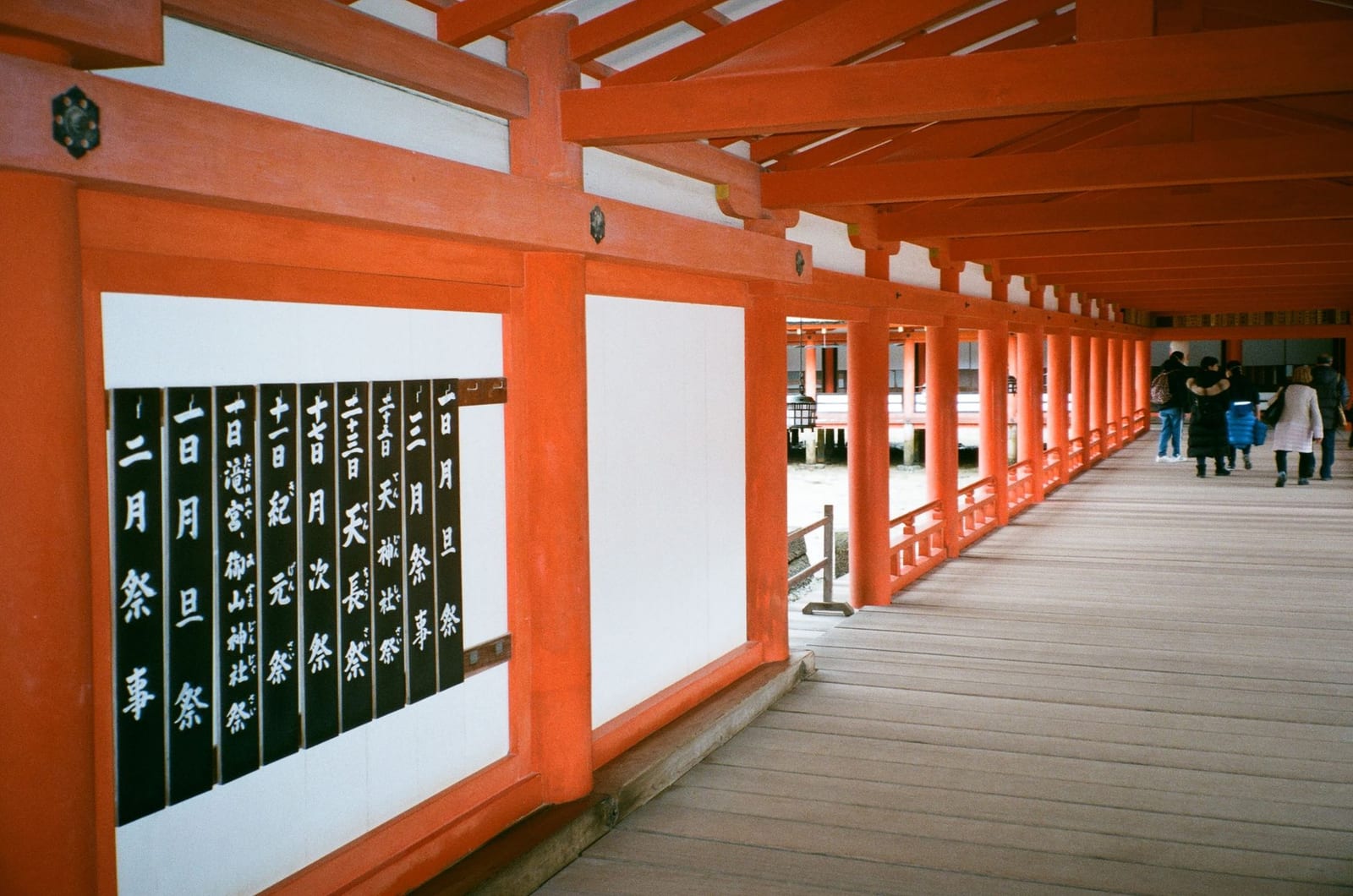
When the day-boats empty, Miyajima exhales: lanterns come on, deer settle, and ryokan guests get the lit torii essentially to themselves. The overnight remains the single best upgrade on the western route - and pairs the next morning with an uncrowded Daisho-in before recrossing to the mainland.
Miyajima in pictures
Miyajima: agent FAQs
High tide or low tide - which should the visit target?
Both, ideally: high tide floats the torii for the classic photograph; low tide lets clients walk to its barnacled legs. The tables are public months ahead, so we set arrival windows to catch one state and, on overnights, both - the double experience is the island's quiet magic.
Beyond the shrine, what fills the day?
Daisho-in - the mountain temple most day-trippers miss, all lantern halls and whimsical statues - then the ropeway toward Misen's summit for Inland Sea panoramas. Down on Omotesando, grilled oysters and maple-leaf momiji manju handle lunch. The deer handle themselves.
Does Miyajima need its own page when Hiroshima's covers it?
For quoting, yes: the island carries distinct logistics - ferries, tides, island ryokan stock - and increasingly stands alone in briefs as a destination in its own right. Agents searching for Miyajima specifically deserve the detail without wading through Peace Park planning.
Pairs well with
Hiroshima
How to route Hiroshima and Miyajima - day trip vs overnight, tide timing for the torii, and how to brief clients for the Peace Memorial.
Korakuen & Kurashiki CanalsOkayama
Routing Okayama - Korakuen garden, the black Crow Castle, Kurashiki's canal quarter, and the Seto bridge gateway to Shikoku and the art islands.
Ryokan & Mt Fuji ViewsHakone
Why Hakone earns one night in most first-visit itineraries — onsen ryokan logic, luggage forwarding, and honest odds on seeing Mt Fuji.
Service lines covering Miyajima
Quoted net within 24 hours and delivered under your brand. Single services, FIT and small groups can be taken on 24 to 48 hours notice; larger group movements need 45 days.
- Luxury FIT - private journeys and ryokan programmes
- Groups & Series - coach logistics and FOC allocation
- MICE & incentives - venues, gala production and delegate movement
- Ground handling - transfers, rail and 24/7 support
- All services →
How your market sells Miyajima
Seasonality, pacing, dietary handling and flight access differ by where your clients fly from. Each market page sets out how we quote and operate for agencies in that country.