Fuji-First Lakeside · Yamanashi
Kawaguchiko for travel agents
When to send clients to Kawaguchiko instead of Hakone — Fuji visibility, lakeside room selection, and what the detour costs an itinerary.
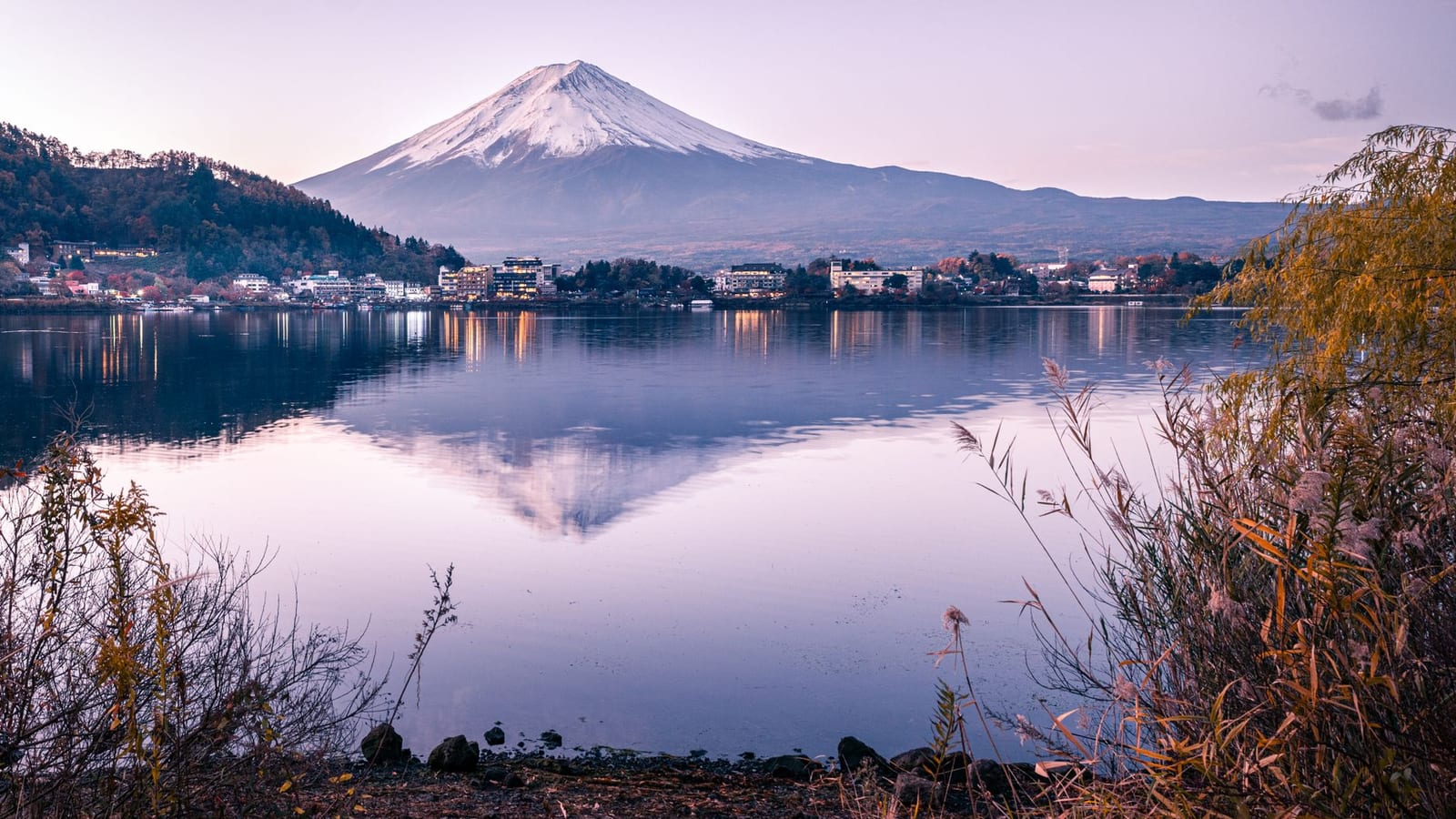
- Fuji-first itineraries where seeing the mountain is the stated goal
- Lakeside Fuji-facing rooms for honeymoon and photography FIT
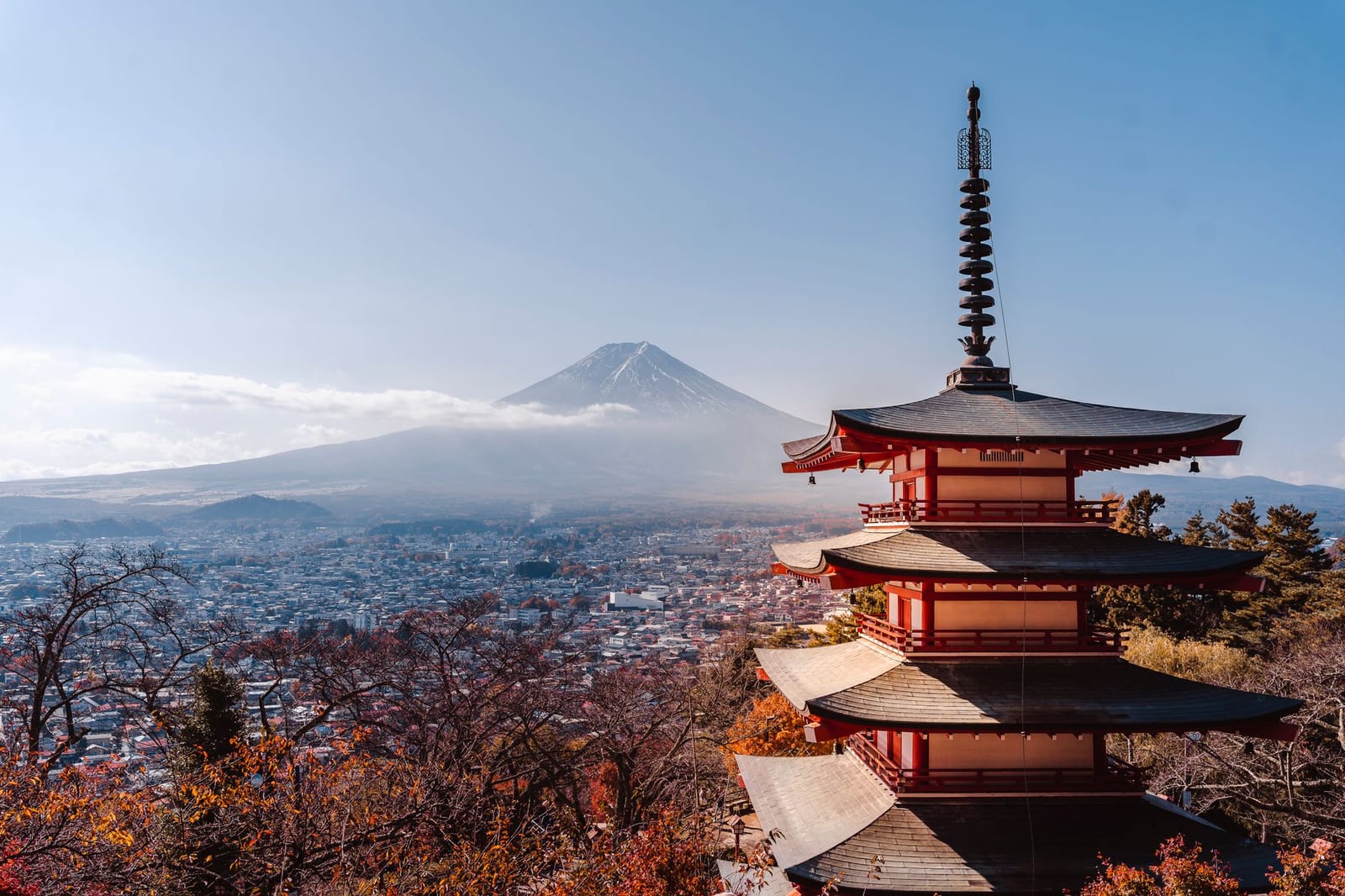
- Clients who arrive already wanting the pagoda-and-Fuji photograph
Winter gives the clearest air and the most reliable mountain; summer is frequently hazy and can hide Fuji for days. Autumn colour around the lake and the June–July lavender at Oishi Park both draw heavy domestic weekend traffic on a road corridor with limited alternatives — keep the visit away from weekends wherever the itinerary allows.
Private vehicles across all types, from cars through full-size coaches, plus licensed tour guides and operated bus tours. Gotemba Premium Outlets routes naturally into a Fuji day for groups that want the shopping stop. The two-day Hakone Pass is available where an itinerary combines Hakone with the Fuji Five Lakes. Contracting covers the Kawaguchiko lakeside properties, so Fuji-facing room categories are booked as a stated specification rather than requested on arrival.
Kawaguchiko is the destination clients describe without naming — the lake, the pagoda, the mountain filling the frame. It delivers that better than anywhere else in easy reach of Tokyo, and it costs a day to do it.
What the detour actually buys
Kawaguchiko puts Fuji at close range and keeps it in view from the lake shore, the ropeway and the right hotel rooms. That is a different proposition from a distant silhouette, and for a client whose trip is built around the mountain it justifies the routing. For a client who mainly wants an onsen night, Hakone does the job without spending a day off the Tokyo–Kyoto line.
Rooms are the decision
A Fuji-facing room and a garden-facing room in the same property are not the same booking, and clients who paid for the view will notice immediately. We treat view category as a contracted specification rather than a request, and we would rather tell an agent a property is unavailable than place a client in the wrong room with the right hotel name on the voucher.
Kawaguchiko in pictures
Kawaguchiko: agent FAQs
Kawaguchiko or Hakone?
They solve different problems. Hakone is an onsen-ryokan night that happens to offer Fuji, and it sits naturally between Tokyo and Kyoto. Kawaguchiko is where the mountain itself carries the day — much closer, and dominating the view — but it is a there-and-back from Tokyo that does not sit on the Kyoto route. Choose it when the client's goal is the mountain and the itinerary can afford the day.
How reliable are the Fuji views?
Weather-dependent and seasonal, and the seasonality is stark. The Japan Meteorological Agency's 1991–2020 normals for its Kawaguchiko station record 212 hours of sunshine in January and 200 in December, against 123 in June and 123 in September — with mean cloud cover running roughly twice as high in June as in midwinter. So clear winter mornings are the best odds of the year, and the June rainy season is the worst, with September close behind it. We do not quote a percentage chance of seeing the mountain: JMA measures cloud and sunshine, not whether Fuji is visible from a given spot. Brief clients so the trip still delivers if the mountain stays hidden — the lake, the pagoda park and the onsen town hold up on their own.
Is the pagoda photograph as easy as it looks?
The view clients have seen is from Arakurayama Sengen Park, reached by a long staircase from the valley floor, and it is busy from mid-morning onward. It works as an early start or not at all. Clients with limited mobility should be routed to lakeside viewpoints instead, and that conversation belongs at quoting stage rather than on the day.
Pairs well with
Hakodate
Routing Hakodate - the Mount Hakodate night view, morning-market seafood bowls, Motomachi's church slopes, and the shinkansen link south.
Sakurajima & Samurai SouthKagoshima
Routing Kagoshima - the smoking Sakurajima volcano, samurai-era gardens, black-pork dining, and the gateway south to Yakushima and the islands.
Black Castle & Alpine GatewayMatsumoto
Routing Matsumoto - the black Crow Castle, gateway to the Japan Alps and Kamikochi, art-town streets, and where it fits between Tokyo and Takayama.
Service lines covering Kawaguchiko
Quoted net within 24 hours and delivered under your brand. Single services, FIT and small groups can be taken on 24 to 48 hours notice; larger group movements need 45 days.
- Luxury FIT - private journeys and ryokan programmes
- Groups & Series - coach logistics and FOC allocation
- MICE & incentives - venues, gala production and delegate movement
- Ground handling - transfers, rail and 24/7 support
- All services →
How your market sells Kawaguchiko
Seasonality, pacing, dietary handling and flight access differ by where your clients fly from. Each market page sets out how we quote and operate for agencies in that country.